
What Are the Best Sweet Pea Varieties to Grow in the UK?
The best sweet pea varieties combine strong fragrance, long cutting stems, and reliable performance in British conditions. With hundreds of named cultivars available, choosing the right ones depends on your priorities — whether that is scent, colour, cutting quality, or suitability for containers.
Related guides
How Do You Choose the Right Sweet Pea for Your Garden?
Start by deciding what matters most: fragrance, flower colour, stem length, or growing habit. These four factors will narrow your shortlist quickly.
Sweet peas broadly divide into three groups. Spencer types are the classic tall climbers with large, frilly flowers and long stems — the showman’s choice for cutting and exhibiting. Grandiflora types are older, smaller-flowered varieties, but often the most powerfully scented of all. Dwarf or bush types are compact plants suited to pots and hanging baskets, though many are less fragrant.
For most UK gardeners, a Spencer variety that also carries genuine scent — rather than the watered-down fragrance of some modern hybrids — is the ideal compromise. The varieties listed throughout this guide have been selected with exactly that balance in mind.
| Type | Height | Flower Size | Fragrance | Best Use |
|---|---|---|---|---|
| Spencer | 1.5–2 m | Large, frilly | Good–excellent | Cutting, borders, showing |
| Grandiflora | 1.5–2 m | Medium, flat | Exceptional | Fragrance, heritage gardens |
| Dwarf / Bush | 30–60 cm | Small–medium | Moderate | Containers, small gardens |
Which Sweet Pea Varieties Have the Best Fragrance?
Grandiflora and older Spencer cultivars consistently outperform modern varieties for scent. If fragrance is your top priority, the following selections are hard to beat.
Flora Norton is a classic grandiflora dating to 1904, bearing mid-blue flowers of genuine old-rose sweetness. Generations of gardeners have grown it specifically for its outstanding scent, and it remains one of the most fragrant varieties available. Stems are shorter than Spencers but the perfume more than compensates.
Bramdean is a modern variety that bucks the trend — it carries both large Spencer-type blooms and truly powerful fragrance. The flowers are a rich lilac-blue, and this cultivar is frequently singled out by exhibitors for combining the best qualities of old and new.
Charlie’s Angel produces pale lavender-blue flowers that are elegantly veined and deliciously scented. It is a reliable performer that flowers prolifically through June and July when regularly cut.
Albutt Blue offers large, sky-blue flowers with strong fragrance — a combination that is surprisingly rare. It is a vigorous grower and a perennial favourite at Royal Horticultural Society shows.
What Are the Best Blue and Purple Sweet Pea Varieties?
Blue and purple sweet peas are consistently the most popular colours, and the range of shades — from pale ice-blue to near-black — is remarkable. Several outstanding varieties exist across this spectrum.
| Variety | Colour | Fragrance | Key Strength |
|---|---|---|---|
| Albutt Blue | Sky blue | Strong | Showstopper, exhibition quality |
| Ballerina Blue | Soft blue | Good | Cottage-garden charm, free-flowering |
| Blue Velvet | Deep violet-blue | Good | Rich, velvety colour depth |
| Black Knight | Deep maroon-purple | Good | Dramatic dark tones, dramatic contrast |
| Almost Black | Near-black maroon | Moderate | Unique collector’s colour |
| Flora Norton | Mid blue | Exceptional | Heritage fragrance variety |
Almost Black deserves special mention. No sweet pea is truly black, but this cultivar comes closer than any other, producing deep maroon blooms that appear almost ebony in certain lights. It is a talking point in any garden and combines beautifully with pale pink or cream varieties in a vase.
Blue Velvet has flowers of extraordinary depth of colour — a true rich violet-blue that holds well even in full sun. It is a reliable performer and one of the most visually striking varieties in the border.
Which Varieties Are Best for Cutting and Flower Arranging?
For cutting, you need long stems, large flowers, and high bud count per stem — ideally five or more. The Spencer class dominates here, bred specifically for the cut-flower market.
Anniversary is one of the finest cutting varieties available. It produces exceptionally long stems with large, shell-pink and cream flowers that are held in beautiful condition. It is an exhibitor’s choice and superb in a vase.
Bobby’s Girl is a salmon-pink variety with excellent stem length and a reliably high bud count. It flowers freely throughout the season when picked regularly, making it an outstanding garden cutting variety.
Cathy produces elegant ivory-white flowers on long straight stems, ideal for wedding and celebration work. Its clean, pale colouring makes it a versatile foil for coloured varieties in mixed arrangements.
Erewhon is a bicolour variety with lilac-pink flowers flushed with deeper rose veining. The large Spencer-type blooms sit well above the foliage on strong stems, and the unusual colouring adds interest to arrangements.
The golden rule for maximising cut stems is to pick flowers before they are fully open — ideally when the lowest bud on the stem is just opening. Never allow flowers to set seed, as this signals the plant to stop producing new blooms.
Are There Good Dark or Unusual Coloured Sweet Pea Varieties?
Yes — dark-coloured and bicolour sweet peas are increasingly popular with gardeners who want something beyond the typical pink-and-white palette. Several varieties stand out.
Black Knight produces deep maroon-purple flowers of outstanding richness. It has been grown since the Victorian era and remains one of the most sought-after dark varieties. The fragrance is pleasing, and it contrasts magnificently with white or pale yellow companions.
Almost Black pushes even darker, with blooms that appear near-black in dappled light. This variety has attracted considerable attention from floral designers looking for dramatic, moody tones in arrangements.
America is a striped bicolour — one of the oldest named varieties still in cultivation, dating to 1896. The flowers are white with bold crimson-red striping, creating a vivid, flag-like effect. It is a genuine collector’s piece and a conversation starter in the garden.
| Variety | Colour Description | Year Introduced | Best Companion Colours |
|---|---|---|---|
| Almost Black | Near-black maroon | Modern | Cream, pale pink, white |
| Black Knight | Deep maroon-purple | Victorian | White, silver, lavender |
| America | White with crimson stripes | 1896 | Deep red, pure white |
| Erewhon | Lilac-pink with rose veining | Modern | Deep purple, soft pink |
What Are the Best Pink and White Sweet Pea Varieties?
Pink and white sweet peas are the backbone of the cottage garden look and the most widely grown colours. The range within these shades is far broader than many gardeners realise.
Anniversary sits in the soft pink-cream range — a blush variety of extraordinary refinement. It is regularly exhibited and highly regarded by those who grow sweet peas competitively.
Bobby’s Girl is a warm salmon-pink, a colour that bridges the gap between the cooler pinks and coral tones. It is one of the most productive cutting varieties and excellent for the garden too.
Cathy is a near-white variety with the cleanest, purest tone — ideal for formal arrangements or as a neutral partner to bolder colours in mixed plantings.
Brook Hall is a warm-toned variety in soft pink, with good fragrance and reliable performance. It is particularly well suited to cottage-garden mixed plantings where a gentle, harmonious colour scheme is the goal.
Bristol produces rich cerise-pink flowers with strong Spencer-type characteristics. The colour is vivid and eye-catching without being garish, and it pairs beautifully with darker purples and whites.
Which Heritage or Heirloom Sweet Pea Varieties Are Worth Growing?
Heritage sweet peas — those introduced before the Spencer revolution of the early twentieth century — offer irreplaceable fragrance and a direct connection to Victorian and Edwardian gardens. Several are still commercially available and well worth seeking out.
Flora Norton (1904) is the quintessential heritage sweet pea for fragrance. Its mid-blue flowers are smaller than modern Spencers but the scent is unrivalled. It suits naturalistic planting schemes and cottage gardens perfectly.
America (1896) is one of the oldest named varieties still in cultivation. Its striking striped flowers are unlike anything produced by modern breeders and represent an important piece of horticultural heritage.
Heritage varieties tend to have fewer florets per stem than Spencers, and their stems are shorter. However, their intensity of fragrance and historical character make them highly valued by specialist growers and those who garden with a focus on authenticity.
Which Sweet Pea Varieties Are Best for Showing and Exhibiting?
For showing, judges look for stems with four or five evenly spaced florets, good substance, fresh colour, and flowers free of petal damage. Spencer varieties dominate the show bench.
Albutt Blue is a consistent show winner. Its large, well-formed sky-blue flowers combine strong fragrance with the substance judges require. It is grown by many of the UK’s most successful exhibitors.
Bramdean is another exhibitor’s favourite, offering rich lilac-blue flowers on long stems with excellent bud spacing. It has won at Royal Horticultural Society level shows and is reliable under cordoning.
Anniversary is considered one of the finest pink-cream exhibition varieties. Its flowers are of exceptional size and refinement, and it performs consistently well under the rigorous cordon system used by serious exhibitors.
For exhibiting, sweet peas are typically grown by the cordon method — a single stem trained vertically up a cane, with all side shoots and tendrils removed. This concentrates the plant’s energy into producing perfect, long-stemmed flowers rather than a bushy mass of growth.
How Should You Combine Sweet Pea Colours for Best Effect?
The most effective sweet pea plantings use either a carefully curated harmonious palette or bold contrasting combinations — a mixed jumble of every colour tends to look busy rather than beautiful.
Harmonious schemes work well with adjacent colours on the spectrum: combine pale blues, mauves, and lilacs (Charlie’s Angel, Albutt Blue, Bramdean) for a cool, elegant border. Or build a warm scheme from salmon-pinks, creams, and soft roses (Bobby’s Girl, Anniversary, Brook Hall).
Contrasting schemes use dark varieties against pale ones for drama: pair Almost Black or Black Knight with Cathy (white) or Ballerina Blue for a striking display.
| Scheme | Varieties to Combine | Effect |
|---|---|---|
| Cool blues & mauves | Albutt Blue, Charlie’s Angel, Bramdean, Ballerina Blue | Elegant, cool, classic |
| Warm pinks & creams | Bobby’s Girl, Anniversary, Brook Hall, Bristol | Romantic, cottage-garden |
| Dark & light drama | Almost Black or Black Knight + Cathy | Striking, contemporary |
| Heritage collection | Flora Norton, America, Black Knight | Authentic, historically resonant |
When Should You Buy and Plant Sweet Pea Plants in the UK?
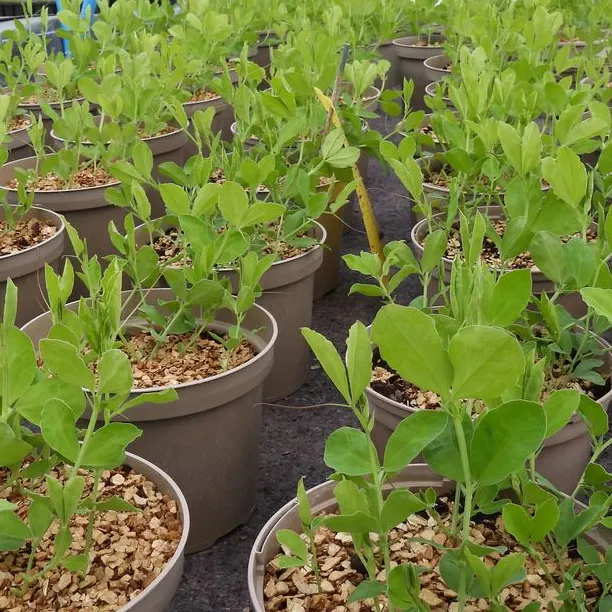
Mail-order sweet pea plants are typically despatched from late March to May, ready to plant out once the risk of hard frost has passed. They are hardier than many annuals but benefit from acclimatisation before planting into their final positions.
Upon receipt, unpack plants immediately and water if the compost is dry. Place them in a cool, bright, frost-free spot — a cold frame is ideal — and allow them to adjust to outdoor conditions over seven to ten days before transplanting. This hardening-off process significantly improves establishment and performance.
Sweet peas perform best in a sunny, open position with moisture-retentive but well-drained soil. They are legumes and fix their own nitrogen, but they do benefit from potassium-rich feeding once in flower — a weekly liquid feed of tomato fertiliser works well.
For detailed growing information, see our complete UK guide to growing sweet peas. If you are growing in containers, our container growing guide covers everything you need to know.
Browse the full range at our sweet pea plants collection.
Frequently Asked Questions
What is the most fragrant sweet pea variety?
Flora Norton and Bramdean are consistently rated among the most fragrant varieties available, with Flora Norton particularly prized for its old-fashioned, powerful scent.
Which sweet pea is best for cutting?
Anniversary and Bobby’s Girl are outstanding cutting varieties, producing long stems with multiple large florets. Pick regularly to keep plants flowering throughout summer.
Are Spencer sweet peas more fragrant than grandifloras?
Generally no — grandiflora types like Flora Norton tend to be more powerfully fragrant, though some Spencer varieties such as Bramdean carry excellent scent.
What is the darkest sweet pea variety?
Almost Black is the darkest sweet pea widely available, producing near-black maroon blooms that create a dramatic effect in borders and arrangements.
Which sweet pea is best for showing?
Albutt Blue, Bramdean, and Anniversary are highly regarded on the show bench for their large, well-formed flowers on long stems with good bud spacing.
Is America a striped sweet pea?
Yes — America (introduced 1896) produces white flowers with bold crimson-red striping. It is one of the oldest named sweet pea varieties still in cultivation and a collector’s favourite.
Can I grow heritage sweet peas alongside modern varieties?
Yes, they grow well together. Bear in mind that heritage varieties like Flora Norton have shorter stems and smaller flowers than Spencer types but offer superior fragrance.
Which sweet pea variety is best for a white garden?
Cathy is the finest white sweet pea for a formal white garden scheme, producing large, pure ivory blooms on strong, straight stems with a clean, elegant appearance.
Do blue sweet peas fade in the sun?
Some do, particularly pale varieties. Blue Velvet and Albutt Blue hold colour well even in sunny positions, making them reliable choices for exposed sites.
When do sweet pea plants arrive if I order by mail?
Ashridge despatches sweet pea plants from late March through May. Plants arrive ready to acclimatise for one to two weeks before planting out in their final positions after the last frost.
How many sweet pea plants do I need for regular cutting?
For a good supply of cut flowers throughout summer, grow at least six to ten plants. Mixing two or three varieties such as Anniversary, Bobby’s Girl, and Cathy gives colour variety.
Which sweet pea suits a cottage garden best?
Brook Hall, Charlie’s Angel, and Flora Norton are ideal for cottage gardens, offering soft colours, genuine fragrance, and an informal, romantic character.
Related Products
- Sweet Peas — Full Collection
- Albutt Blue Sweet Pea
- Almost Black Sweet Pea
- America Sweet Pea
- Anniversary Sweet Pea
- Ballerina Blue Sweet Pea
- Black Knight Sweet Pea
- Blue Velvet Sweet Pea
- Bobby’s Girl Sweet Pea
- Bramdean Sweet Pea
- Bristol Sweet Pea
- Brook Hall Sweet Pea
- Cathy Sweet Pea
- Charlie’s Angel Sweet Pea
- Erewhon Sweet Pea
- Flora Norton Sweet Pea

Leave a Reply