
Contents
- 1 What is the best soft fruit to grow in the UK?
- 2 Which soft fruits are the easiest to grow for beginners?
- 3 Which soft fruit produces the highest yield for its size?
- 4 What are the best raspberry varieties to grow in the UK?
- 5 What are the best blackcurrant varieties for UK gardens?
- 6 Which gooseberries and currants are worth growing?
- 7 Are blueberries worth growing in the UK, and which varieties are best?
- 8 Which blackberry varieties are best for UK gardens?
- 9 What is the best soft fruit for small gardens or pots?
- 10 When is the best time to plant soft fruit in the UK?
- 11 Which soft fruits extend the season the longest?
- 12 How do you protect soft fruit from birds and pests?
- 13 Frequently Asked Questions
- 13.1 What is the single easiest soft fruit to grow in the UK?
- 13.2 Can I grow soft fruit on clay soil?
- 13.3 Do soft fruit plants need a pollination partner?
- 13.4 How long before soft fruit plants produce a good crop?
- 13.5 What soil pH do soft fruits prefer?
- 13.6 Can raspberries and blackberries be grown against a fence?
- 13.7 Should I remove fruit in the first year to help plants establish?
- 13.8 Which soft fruits are most suitable for north-facing or shaded gardens?
- 13.9 How do I feed soft fruit bushes?
- 13.10 Is rhubarb classed as a soft fruit?
- 13.11 Can I grow soft fruit without a dedicated fruit cage?
- 13.12 When should I prune soft fruit bushes?
- 14 Related Articles
What is the best soft fruit to grow in the UK?
The best soft fruit to grow in the UK includes strawberries, raspberries, blackcurrants, gooseberries, redcurrants, blueberries, and blackberries — all of which thrive in our temperate climate with relatively little fuss. Most produce generous harvests within a year or two of planting, and many will crop reliably for a decade or more with minimal intervention. Whether you have a large kitchen garden or a modest patio, there is a soft fruit to suit your space and skill level.
Related guides
Which soft fruits are the easiest to grow for beginners?
Blackcurrants, gooseberries, and autumn-fruiting raspberries are among the most forgiving soft fruits for beginners, requiring little pruning knowledge in the early years and tolerating a range of soils. Strawberries are also widely recommended for first-time growers because they fruit in their first season and need no support structures.
The key to success with any soft fruit is site preparation: dig in plenty of well-rotted organic matter before planting, ensure reasonable drainage, and choose a reasonably sunny position. Most soft fruits will tolerate partial shade, but yields are always better in full sun. The table below summarises how each type rates for ease of establishment.
| Soft Fruit | Ease for Beginners | First Crop | Productive Life |
|---|---|---|---|
| Blackcurrant | ★★★★★ | Year 2 | 10–15 years |
| Gooseberry | ★★★★★ | Year 2 | 15–20 years |
| Autumn Raspberry | ★★★★★ | Year 1 | 8–12 years |
| Strawberry | ★★★★☆ | Year 1 | 3–4 years per plant |
| Blackberry | ★★★★☆ | Year 2 | 15+ years |
| Blueberry | ★★★☆☆ | Year 2–3 | 20+ years |
| Redcurrant | ★★★★☆ | Year 2 | 15–20 years |
Which soft fruit produces the highest yield for its size?
Blackcurrants and autumn-fruiting raspberries consistently deliver the heaviest crops relative to the space they occupy. A well-established blackcurrant bush can yield 4–5 kg of fruit in a single season from a footprint of less than a square metre.
Gooseberries are equally productive and often overlooked — a mature bush can yield 5 kg or more in a good year. Summer raspberries spread to fill a row but can produce 1–2 kg per cane over the season. Blueberries yield modestly (1–2 kg per bush in most UK gardens) but the fruit is high-value and the plants are very long-lived. Redcurrants and whitecurrants sit in the middle ground: reliable, decorative, and capable of 3–4 kg per bush once established.
What are the best raspberry varieties to grow in the UK?
Raspberries divide into summer-fruiting (which crop on last year’s canes) and autumn-fruiting (which crop on the current year’s canes). For straightforward management, autumn-fruiting types are hard to beat because their pruning regime is simply to cut everything to the ground in February.
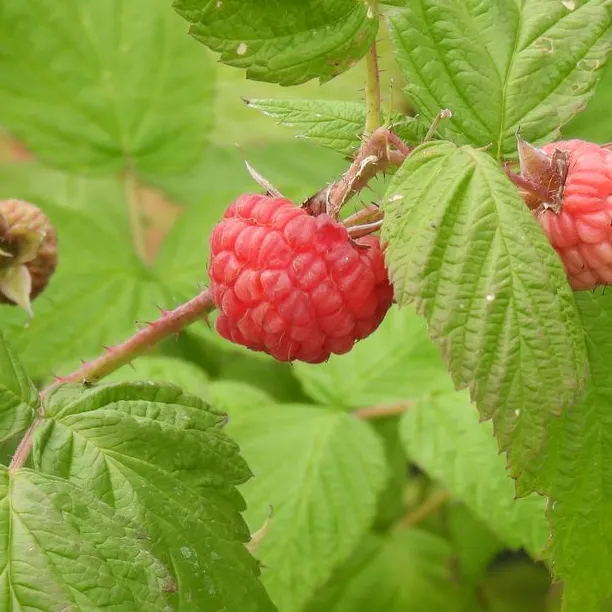
Among summer varieties, Glen Ample is widely regarded as one of the finest: large, firm fruit, excellent flavour, and very heavy crops. Tulameen is another outstanding choice, particularly valued for its exceptionally long fruiting season and superb taste. For autumn cropping, Autumn Bliss remains the benchmark — it is compact, reliable, and produces well even in less-than-ideal summers. Joan J is a spine-free autumn variety that is easier to handle and crops prolifically into October.
Plant bare-root canes between November and March, in rows with 45 cm between canes and 1.8 m between rows. Summer varieties need a support framework of posts and horizontal wires; autumn varieties can often stand without support in a sheltered garden.
For detailed cultivation advice, see our guide to How to Grow Raspberry Bushes.
What are the best blackcurrant varieties for UK gardens?
Blackcurrants are arguably the most dependable fruiting shrub in the British garden: hard, cold-tolerant, and extremely productive. The variety you choose will largely determine harvest timing and disease resistance.
Ben Connan is a compact, heavy-cropping variety with very large berries — ideal for smaller gardens. Ben Hope offers excellent resistance to big bud mite (the most troublesome blackcurrant pest) as well as reversion virus, making it a smart long-term choice. Ben Sarek is another compact option, cropping heavily and fruiting a little earlier than Ben Hope. For the largest, juiciest berries, Titania is outstanding, though slightly more vigorous.
Plant blackcurrants 5 cm deeper than they were growing in their pot or nursery bed — this encourages strong new shoots from below soil level and results in a bushier, more productive plant. Our guide on How to Grow Blackcurrant Bushes covers soil preparation, pruning, and feeding in full.
Which gooseberries and currants are worth growing?
Gooseberries, redcurrants, and whitecurrants are all members of the Ribes family and share similar cultivation requirements: they tolerate partial shade better than most soft fruits, crop reliably in most UK soils, and respond well to training as cordons on a fence or wall.
| Variety | Type | Flavour / Use | Notable Trait |
|---|---|---|---|
| Invicta | Gooseberry | Culinary & dessert | Very heavy cropping; mildew resistant |
| Hinnonmäki Red | Gooseberry | Dessert — sweet | Excellent mildew resistance; lovely flavour |
| Pax | Gooseberry | Dessert — rich red | Nearly thornless — easy to pick |
| Red Lake | Redcurrant | Culinary & dessert | Long strigs; reliable heavy cropper |
| Jonkheer van Tets | Redcurrant | Culinary | Early season; very productive |
| White Versailles | Whitecurrant | Dessert — mild, sweet | Classic variety; beautiful in fruit |
Gooseberries and currants trained as single or double cordons are exceptionally space-efficient: you can fit several varieties in the space a bush would occupy, extending your season with early and late fruiting types side by side. See our guides to Pruning Gooseberry, Redcurrant and Whitecurrant and Growing Redcurrants and Whitecurrants for full guidance.
Are blueberries worth growing in the UK, and which varieties are best?
Blueberries are absolutely worth growing if you can provide the one thing they absolutely require: acidic soil with a pH of 4.5–5.5. On alkaline soils, they must be grown in containers of ericaceous compost, which is perfectly achievable on a patio.
Plant at least two different varieties to ensure cross-pollination and heavier crops. Bluecrop is the most widely grown variety in the UK: reliable, mid-season, and producing large berries with classic blueberry flavour. Duke is an early variety, useful for extending the season, while Chandler produces exceptionally large berries and is ideal for eating fresh. Spartan is well suited to the UK climate, cropping heavily in late July and August. All are fully hardy and will thrive for 20 years or more with minimal attention.
Mulch with composted pine bark or wood chip each spring to maintain soil acidity and moisture. Water with rainwater where possible — tap water in hard-water areas can gradually raise soil pH. For full planting and care advice, see our Growing Blueberries — Bush Guide.
Which blackberry varieties are best for UK gardens?
Modern thornless blackberry varieties have transformed this fruit from a slightly awkward crop into one of the most productive and low-maintenance options available. They fruit on second-year canes (like summer raspberries), so the pruning principle is simply to remove fruited canes in autumn and tie in the new growth.
Oregon Thornless is the classic choice: genuinely thornless, very productive, and producing excellent flavour. Loch Ness is semi-erect and extremely heavy cropping, with large, sweet berries — it needs less tying-in than more sprawling types. Adrienne is another near-thornless variety with superb flavour and a mid-season cropping period. For something a little unusual, Waldo is a compact, truly thornless variety that suits smaller gardens and can even be grown in a large container.
All blackberries benefit from a warm, sheltered wall or fence; the fruit is sweeter and the canes more manageable when trained. Our guide to Training and Pruning Blackberry Bushes explains the system in full.
What is the best soft fruit for small gardens or pots?
For small gardens and containers, compact and dwarf varieties are the obvious choice, but the type of fruit matters too. Strawberries, blueberries, and compact gooseberry varieties are particularly well suited to container growing.
| Fruit | Suitable for Pots? | Minimum Pot Size | Notes |
|---|---|---|---|
| Strawberry | Excellent | 20 cm diameter | Hanging baskets also work well |
| Blueberry | Excellent | 40–50 cm diameter | Use ericaceous compost; water with rainwater |
| Gooseberry (compact) | Good | 40 cm diameter | Ben Sarek or Pax work well |
| Autumn Raspberry | Good | 40–50 cm diameter | Keep well watered in dry periods |
| Blackcurrant (compact) | Possible | 50 cm diameter | Feed generously; repot every 2–3 years |
| Blackberry (Waldo) | Possible | 50+ cm diameter | Needs wall or trellis support |
When growing any soft fruit in a container, the single most important factor is not letting the compost dry out completely. A layer of mulch on the surface of the pot significantly reduces water loss in summer. Feed container-grown fruit with a high-potassium liquid feed from late spring through to harvest to maintain crop quality.
When is the best time to plant soft fruit in the UK?
Bare-root soft fruit plants — the most economical and best-value form — should be planted between November and March while they are dormant. This is the traditional planting window for raspberries, blackcurrants, gooseberries, currants, and blackberries. Pot-grown plants can be planted at any time of year, but autumn and spring planting allows roots to establish before the heat of summer.
Strawberry runners are typically planted in late summer (August–September) to establish before winter and produce a good crop the following June. Alternatively, cold-stored runners can be planted in spring for a first-year summer crop, though yields will be lighter. Blueberries are most commonly planted in autumn or early spring.
If planting is delayed after bare-root plants arrive, keep them cool and moist — heel them in temporarily in a sheltered corner of the garden rather than leaving the roots exposed.
Which soft fruits extend the season the longest?
By choosing varieties carefully across different fruit types, it is possible to harvest homegrown soft fruit from late May through to October — nearly half the year. The table below maps approximate UK harvest periods to help you plan a succession of crops.
| Fruit / Variety | Approximate Harvest Period |
|---|---|
| Gooseberry (early — Invicta) | Late May – June (culinary use from late May) |
| Strawberry (early — Honeoye) | Late May – June |
| Redcurrant (Jonkheer van Tets) | Late June – July |
| Summer Raspberry (Glen Ample) | July |
| Blackcurrant (Ben Hope) | July – August |
| Blueberry (Bluecrop) | July – August |
| Blackberry (Oregon Thornless) | August – September |
| Autumn Raspberry (Autumn Bliss) | August – October |
| Strawberry (perpetual — Mara des Bois) | June – October |
Rhubarb technically precedes all of these, providing harvests from late February (under a forcing pot) through to June. It is not a true fruit botanically, but it fills the hungry gap before the soft fruit season begins and deserves a place in any productive garden. See our Growing Rhubarb Guide for full details.
How do you protect soft fruit from birds and pests?
Birds — particularly blackbirds, starlings, and pigeons — are the most significant threat to ripe soft fruit, and netting is the only reliable solution. A dedicated fruit cage with a permanent frame makes management straightforward and is a worthwhile investment if you grow several types of soft fruit.
For individual bushes, draping fine mesh netting over a frame of canes or a purpose-built support is effective and inexpensive. Remove netting during flowering to allow pollinating insects access. Strawberries are also vulnerable to slugs: grow them in raised beds or containers to reduce contact with the soil, and avoid mulching with materials that retain excessive moisture around the crowns. Blueberries are attractive to birds as soon as the fruit begins to colour; net early. Gooseberries and currants can suffer from sawfly caterpillars, which can strip a bush of its leaves very rapidly from late spring — inspect the undersides of leaves regularly and remove caterpillars by hand or treat with an approved insecticide as a last resort.
Frequently Asked Questions
What is the single easiest soft fruit to grow in the UK?
Blackcurrants are arguably the easiest: they are fully hardy, tolerate a range of soils, shrug off mild neglect, and produce heavy crops reliably once established with only modest annual pruning required.
Can I grow soft fruit on clay soil?
Most soft fruits will grow on clay soil provided it is well-drained. Dig in generous quantities of grit and organic matter before planting, and avoid planting into waterlogged conditions. Raised beds are an excellent solution on heavy clay.
Do soft fruit plants need a pollination partner?
Most soft fruits — including raspberries, blackcurrants, gooseberries, and blackberries — are self-fertile and will crop without a partner. Blueberries are the notable exception: always plant at least two varieties together to ensure good cross-pollination and full crops.
How long before soft fruit plants produce a good crop?
Most soft fruit produces a light crop in Year 2 and reaches full production by Year 3–4. Autumn-fruiting raspberries are the fastest, often cropping usefully in their first autumn after spring planting.
What soil pH do soft fruits prefer?
Most soft fruits prefer a slightly acidic to neutral soil, around pH 6.0–6.5. Blueberries are the exception, requiring pH 4.5–5.5. Test your soil before planting and adjust with lime (to raise pH) or sulphur chips (to lower it).
Can raspberries and blackberries be grown against a fence?
Yes. Both grow well trained to horizontal wires fixed to a fence or wall. A south- or west-facing fence is ideal. Avoid north-facing aspects for summer raspberries as they need warmth to ripen well.
Should I remove fruit in the first year to help plants establish?
With blackcurrants, removing flowers in the first spring encourages stronger root and shoot development and leads to heavier future harvests. Raspberries and strawberries also benefit from having their flowers removed in year one, though many gardeners allow a light first-year crop.
Which soft fruits are most suitable for north-facing or shaded gardens?
Redcurrants, whitecurrants, and gooseberries tolerate partial shade better than any other soft fruit. Blackcurrants also manage reasonably well in moderate shade, though cropping will be lighter than in full sun.
How do I feed soft fruit bushes?
Apply a balanced general-purpose fertiliser in early spring as growth begins, followed by a potassium-rich feed (such as sulphate of potash) in late spring to encourage fruit development. Blackcurrants in particular benefit from a high-nitrogen feed as they produce new fruiting wood each year.
Is rhubarb classed as a soft fruit?
Botanically, rhubarb is a vegetable, but it is traditionally grouped with soft fruits in the kitchen garden. It is one of the most productive and low-maintenance crops you can grow. See our Growing Rhubarb Guide for planting advice.
Can I grow soft fruit without a dedicated fruit cage?
Yes. Individual bushes and canes can be protected with drape-over netting supported on canes during the fruiting period. This is perfectly effective and costs very little, though a permanent cage saves time once you grow several types together.
When should I prune soft fruit bushes?
Timing varies by fruit type. Blackcurrants, gooseberries, and currants are pruned in winter or immediately after fruiting. Raspberries are pruned after fruiting (summer types) or cut to the ground in late winter (autumn types). See our individual pruning guides for each crop.


Leave a Reply