
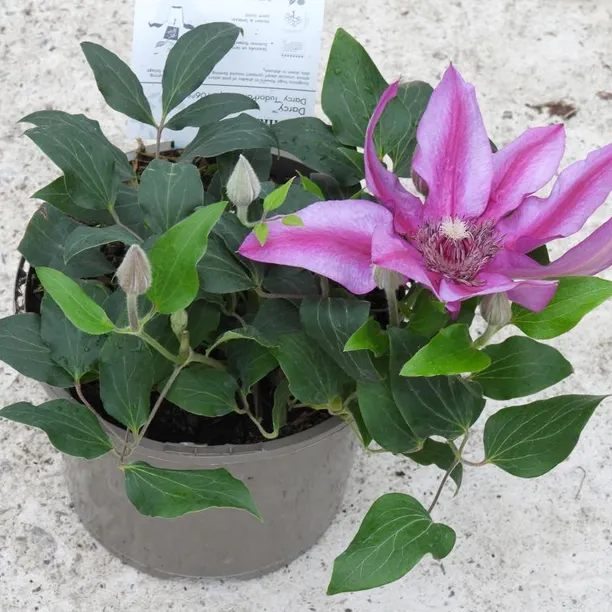
How to grow clematis successfully in your garden?
Growing clematis successfully requires understanding their specific needs: cool, moist roots with plenty of organic matter, and heads reaching towards sunlight. These versatile climbers can transform any garden space when planted correctly and given appropriate support.
The secret lies in choosing the right variety for your conditions, preparing the soil thoroughly, and providing consistent care during the crucial first year of establishment.
Related articles
- Complete clematis pruning guide
- Best clematis varieties for British gardens
- Clematis companion planting ideas
- Solving common clematis problems
When is the best time to plant clematis?
Plant clematis between October and March, avoiding periods when the ground is frozen or waterlogged. Container-grown plants can technically be planted year-round, but autumn planting gives the best establishment.
Spring planting (March-April) works well but requires more diligent watering through the first summer. Avoid planting during hot, dry spells or when frost threatens. The great gardener Christopher Lloyd always insisted that clematis planted in autumn would “romp away” the following spring, having had time to establish their root systems during the cooler months.
| Planting Season | Advantages | Disadvantages | Care Required |
|---|---|---|---|
| Autumn (Oct-Nov) | Best root establishment, less watering needed | Risk of frost damage to young growth | Minimal, mulch well |
| Winter (Dec-Feb) | Dormant planting, no transplant shock | Soil may be too wet or frozen | Wait for suitable conditions |
| Spring (Mar-Apr) | Immediate growth visible, no frost risk | Requires more summer watering | Regular watering essential |
| Summer (May-Sep) | Container plants only | High stress, poor establishment | Daily watering, shade protection |
Where should you plant clematis for best results?
Choose a location where clematis roots will stay cool and moist whilst the top growth can reach towards sunlight. This doesn’t necessarily mean full sun – many clematis thrive in partial shade.
The ideal spot provides morning sun with some afternoon shade, or dappled light throughout the day. Avoid exposed, windy positions and areas that become waterlogged in winter. East or west-facing walls work particularly well, whilst hot south-facing walls can stress plants unless they receive adequate moisture.
Consider what the clematis will climb – existing trees, shrubs, or artificial supports. Our Clematis ‘Jackmanii’ is perfect for beginners and tolerates a wide range of conditions, whilst Clematis montana ‘Elizabeth’ suits larger spaces where vigorous growth is welcome.
How do you prepare soil for planting clematis?
Clematis demand rich, well-draining soil with plenty of organic matter. Dig a hole twice the width of the root ball and incorporate generous amounts of well-rotted compost or manure.
Most clematis prefer slightly alkaline soil (pH 6.5-7.5), but they’re quite adaptable. If your soil is very acidic, add garden lime several weeks before planting. Heavy clay soils benefit from added grit or perlite to improve drainage, whilst sandy soils need extra organic matter to retain moisture.
| Soil Type | Amendments Needed | Best Clematis Varieties |
|---|---|---|
| Heavy clay | Grit, compost, raised planting | Montana types, Clematis ‘Bill MacKenzie’ |
| Sandy soil | Lots of organic matter, mulch | Clematis ‘Nelly Moser’, large-flowered hybrids |
| Chalky soil | Organic matter to retain moisture | Most varieties thrive, especially viticellas |
| Acidic soil | Garden lime, organic matter | Species clematis, alpina varieties |
What’s the correct way to plant clematis?
Plant clematis 5cm deeper than they were growing in their pots – this encourages new shoots from below ground level and helps prevent clematis wilt. Angle the plant slightly towards its intended support.
Remove the plant carefully from its pot, teasing out any circling roots. If the root ball is very congested, make several vertical cuts with a sharp knife to encourage new root growth. Position the plant so the soil level will be 5cm above the original root ball surface.
Backfill with your improved soil mix, firming gently as you go. Water thoroughly after planting and apply a thick mulch of organic matter around the base, keeping it clear of the stem itself. Install support structures immediately – clematis begin twining almost as soon as they start growing.
How much water do clematis need?
Newly planted clematis need consistent moisture for their first year, requiring deep watering 2-3 times per week during dry spells. Established plants are more drought tolerant but still appreciate regular watering during flowering periods.
Apply water at soil level rather than overhead to reduce disease risks. A good soaking once or twice weekly is better than frequent light watering, which encourages shallow root growth. Container-grown clematis may need daily watering during hot weather.
Signs of water stress include wilting leaves, poor flowering, and premature leaf drop. However, waterlogged soil is equally damaging and can lead to root rot. The soil should be moist but never sodden.
What fertiliser do clematis need?
Feed clematis in early spring with a balanced fertiliser, followed by monthly liquid feeds during the growing season. They’re hungry plants that respond well to regular feeding.
Apply a general-purpose granular fertiliser (such as blood, fish and bone) around the base in March, working it lightly into the soil surface. From April to August, provide fortnightly liquid feeds with a tomato fertiliser, which provides the potash needed for good flowering.
| Month | Fertiliser Type | Application | Purpose |
|---|---|---|---|
| March | Blood, fish & bone | Handful around base | Spring growth boost |
| April-May | Tomato feed | Fortnightly liquid | Flower bud development |
| June-August | High-potash feed | Weekly liquid | Support heavy flowering |
| September | Bone meal | Autumn application | Root development |
Avoid high-nitrogen fertilisers in late summer as these encourage soft growth that’s vulnerable to frost. A sprinkling of bone meal in autumn helps strengthen the root system for winter.
What support do clematis need?
Clematis climb by twining their leaf stalks around supports, so they need something thin enough to grip – about pencil thickness or less. Provide support immediately after planting, even for small plants.
Wire mesh, trellis, or a framework of horizontal wires work well. For clematis growing up trees, help young plants reach the first branches with canes or wire. Avoid thick posts or smooth surfaces that leaf stalks cannot grip around.
Popular support options include:
- Trellis panels (minimum 1.8m high for most varieties)
- Wire mesh against walls or fences
- Obelisks and tripods for container growing
- Horizontal wires at 45cm intervals
- Existing shrubs and small trees
Our Clematis ‘Princess Diana’ works beautifully on obelisks, whilst vigorous varieties like Clematis armandii need substantial support structures.
How do you care for clematis in their first year?
First-year care focuses on establishment: consistent watering, regular feeding, and protecting young growth from damage. Most clematis benefit from hard pruning in late February of their first year to encourage bushy growth from the base.
Water regularly but don’t overwater – the soil should be moist, not waterlogged. Apply liquid feed every two weeks during the growing season and maintain a thick mulch around the base to keep roots cool.
Tie in new growth regularly as it develops, guiding shoots in the direction you want them to grow. Protect young plants from slugs and snails, which can devastate new clematis shoots. Remove any flowers in the first year to direct energy into root and stem development, though many gardeners can’t resist leaving a few!
What are the most common clematis growing mistakes?
The biggest mistake is planting too shallow – unlike most plants, clematis must be planted deeper than they were growing in their pots. Poor soil preparation and inadequate support are other frequent problems.
Many gardeners also worry unnecessarily about clematis wilt, a fungal disease that’s less common than often believed. Symptoms include sudden wilting and blackening of shoots, usually affecting large-flowered hybrids more than species clematis.
| Common Mistake | Consequences | Solution |
|---|---|---|
| Shallow planting | Poor establishment, wilt susceptibility | Plant 5cm deeper than pot level |
| Poor soil preparation | Slow growth, poor flowering | Add lots of organic matter |
| Inadequate support | Tangled growth, wind damage | Install proper trellis or wires |
| Wrong pruning group | Poor or no flowering | Learn your variety’s pruning needs |
Which clematis varieties are best for beginners?
Start with reliable, disease-resistant varieties that forgive minor care mistakes. Group 3 clematis (hard pruning) are often easiest for beginners because pruning is straightforward.
Excellent beginner varieties include:
- Clematis ‘Jackmanii’ – purple flowers, very reliable, Group 3
- Clematis ‘Etoile Violette’ – masses of small purple flowers, disease resistant
- Clematis ‘Bill MacKenzie’ – yellow flowers followed by silky seedheads
- Clematis montana ‘Elizabeth’ – vigorous spring flowering, pink blooms
These varieties are forgiving of different soil types and positions, flower reliably, and have straightforward care requirements. Avoid very large-flowered hybrids initially – whilst stunning, they can be more challenging to establish.
Frequently Asked Questions
How deep should I plant clematis?
Plant clematis 5cm deeper than the soil level in their pot. This deeper planting encourages shoots to develop below ground, helping prevent clematis wilt and creating a bushier plant.
Why is my clematis not flowering?
Common causes include wrong pruning, insufficient sunlight, over-feeding with nitrogen, or the plant being too young. Most clematis need at least 6 hours of light and take 2-3 years to establish fully.
When should I prune my clematis?
Pruning timing depends on your variety’s group. Group 1 (spring flowering) needs minimal pruning after flowering. Group 2 prune lightly in February. Group 3 varieties get hard pruning in late February.
Can clematis grow in shade?
Many clematis tolerate partial shade, especially varieties with smaller flowers. Clematis alpina and some montana varieties actually prefer some shade. Avoid deep shade for best flowering.
How fast do clematis grow?
Growth rates vary enormously. Montana varieties can reach 8-10 metres, whilst compact varieties like Clematis ‘Bourbon’ stay under 3 metres. Most achieve significant growth in their second year.
What causes clematis wilt?
Clematis wilt is a fungal disease causing sudden stem blackening and collapse. It mainly affects large-flowered hybrids. Deep planting helps recovery, and affected shoots should be cut back to healthy growth immediately.
Can I grow clematis in containers?
Yes, many clematis suit containers if given large pots (minimum 45cm diameter), good drainage, and regular watering. Compact varieties like Clematis ‘Piilu’ work particularly well.
How do I train clematis to climb?
Gently tie young shoots to supports using soft ties. Guide growth in your preferred direction, spacing shoots evenly. Clematis climb by twining leaf stalks around supports, so provide thin wires or mesh.
Should I mulch around clematis?
Yes, mulching keeps roots cool and moist whilst suppressing weeds. Use organic mulch like compost or bark chips, keeping it away from the stem base to prevent rot issues.
When do clematis flower?
Flowering times vary by variety. Early clematis like montana flower in May-June. Summer varieties bloom June-September. Some provide autumn interest with decorative seedheads.
How long do clematis live?
Clematis are long-lived perennials that can thrive for decades with proper care. Established plants often improve with age, producing more flowers as their root systems develop.
Do clematis attract wildlife?
Yes, clematis flowers attract bees, butterflies, and other pollinators. Some varieties like Clematis tangutica produce seeds popular with finches, whilst the fluffy seedheads provide nesting material.
Related Products
- Group 1 Clematis Collection
- Group 2 Clematis Collection
- Group 3 Clematis Collection
- Clematis for Containers
Related Articles
- Complete clematis pruning guide
- Best clematis varieties for British gardens
- Clematis companion planting ideas
- Solving common clematis problems
Related guides
- Best climbing plants — which climber for walls, fences, scent, shade and screening
- Clematis pruning groups explained — Groups 1, 2 and 3 with variety lists
- Clematis wilt — what it is, how to prevent it, and which varieties resist it
- Do climbing plants damage walls and fences?
- Evergreen climbing plants — year-round cover for walls, fences and screens

Leave a Reply